 |
Volt's "Zone Control" Junction Box
Hubs are an easy, efficient way to insure that you have done your layout properly. They virtually guarantee perfect results, bright even lighting, prevents over/under volting. Additionally all your connections are in one place (so they are easy to trouble shoot/service). Lastly, with VoltPro’s exclusive above ground Hub System, all your connections are above ground in a dry, weather tight junction box – not in the ground exposed to constant moisture and harsh electrical conditions like traditional connections or even competing hub systems.
Hub System compatible fixtures have 25’ lead wires on them. You place the hub in the middle of a distance zone; run a cable from the transformer to the hub. Inside the hub connect all the fixtures to the end of the cable. Do not cut excess lead wire from the fixtures—leave all fixtures with their original 25’ (this insures that all fixtures are have the same total amount of cable from the fixture to the transformer. The end result is a home run with several fixtures branching off the end of it like a flower stem (home run) with multiple flower pedals (the fixture wires). Electricity has to travel exactly equal distances from the transformer to each fixture, plus there are no daisy chained fixtures – perfect layout. Lastly measure the voltage in any one fixture (it will be the same for all of them on that hub). If the voltage is below 12 volts, move that run up to the appropriate voltage tap on the transformer until the fixtures have between 11-12 volts. For hub Systems you can use more fixtures per run, up to 200 watts worth of fixtures.
To hub or not to hub, that is the question:
You don’t have to hub every fixture or only use hubs with “Hub Compatible” fixtures that have 25’ lead wires (although it certainly is convenient). Hubs can make a great junction box for spider splicing several main cables together (10-2 or 12-2 cables). Many direct burial connectors can’t handle several thick gauge cables connecting together – hubs make for a convenient, dry, above ground place to make these connections. When doing more than a T connection but a spider splice with several cables in one place—hubs are great. Many fixtures in one area – hubs are great.
Realistically most installs call for a combination of layout methods—most fixtures hub connected, some far away fixtures that are not grouped together will have the cable run “T” –d off to reach them with a couple daisy chained in line off the T. Some T’s will be connected with a regular direct burial splice because there are only 3 wires in a T. Another run may have 4 or 5 cables coming off the home run more like a flow, and thus have the home run hooked to a hub. Lastly many might have the fixtures wires connected to the cable home run via a hub as a hub system is traditionally used. No layout or property is the same, and you will have to use a variety of techniques. The end goal is to be a champ and get all you fixtures to output between 11.25-11.75 volts for perfection!
PRO-TIP: ATTACH A SURFACE MOUNT ACCESSORY (INSTEAD OF A STAKE) AND YOU CAN MOUNT THE HUB WHERE EVER YOU NEED IT -- INCLUDING IN TREES WHEN DOING MULTIPLE FIXTURE DOWNLIGHTING, BEHIND RAFTERS WHEN LIGHTING A PERGOLA, UNDER A DECK, ETC.. IT'S THE INDUSTRY'S ONLY HUB THAT CAN ALSO BE SURFACE MOUNTED!
Volt's "Zone Control" Junction Box Features
- Note: Connectors NOT included. If you want them, you must order the splice connectors from the drop down menu.
- Connections are inside a sealed compartment. Other manufacturers use an open design with the connections underground and exposed to the dirt/water/humid conditions and insects.
- Sealed body
- Removable top
- 8 rubber cap sealed cable entrance/exit holes
- Brass threaded spike screws
- Stake included
- Mount on a stake above ground for easy access or bury without a stake only exposing the top when discreet mounting is desirable.
- The Volt "Zone Control" Junction box is a must for most landscape light layouts.
- Have one cable from transformer to the "Zone Control" Junction Box, then several cables coming out of the hub that go to different fixture areas.
- As common sense would tell you, a junction box is a place to make all your splices instead of having make separate home runs all the way back to the transformer. As with any electrical layout, you can wire in series or parallel. A hub enables you to wire in parallel thus reducing the voltage drop you get when wiring low voltage in series.
- Having a junction box out in an area reduces the need for many long runs back to the transformer, reduce cable usage, provide more efficient, flexible layouts.
- Most importantly enable you to properly reduce voltage drop.
- Lifetime Warranty
Q.Does this fixture come in any other colors?
A.All of our fixtures are either solid brass or solid copper and do not come painted or coated. Our brass fixtures come with a polished patina finish giving them a more natural aged or antique look.
Q.Is a bulb included in the sale price?
A.Our Infiniti line of LED fixtures are the only products to come with a lamp pre-installed as part of the fixture only price. For all other fixtures you will be prompted to select a bulb from a list of options available for that fixture or choose to receive the fixture only without any bulb.
Q.Are your fixtures solid brass or copper or are they plastic with a metal finish?
A.Every one of our fixtures are either solid brass or solid copper (depending on the fixture you choose). Although the use of aluminum and or plastic may save in upfront cost and weight our solid construction fixtures are built to last a lifetime as a permanent part of your landscape.
VOLT® LIGHTING SHIPPING MAP
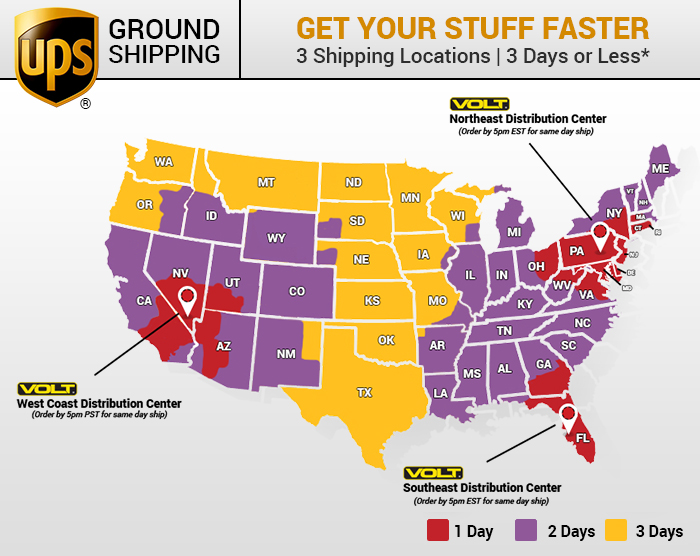
Click HERE to learn more about shipping.

Junction Box Warranty Information
• Residential - Lifetime Warranty
• Commercial - Lifetime Warranty
Complete VOLT® Warranty Info Click
HERE
For more information or to arrange warranty replacement of your VOLT® Junction Box:
813-978-3700 Monday - Friday from 8am to 8pm EST, Saturday and Sunday from 10am to 6pm EST.
View All Accessories
|
|
|










 Good product


 DIY
DIY 