



-
Landscape Lighting (12V)
- All Landscape Lighting
- Landscape Lighting Kits
- Spot Lights
- Flood Lighting
- Path & Area Lights
- Well Lights
- Deck Lights
- Step Lights
- Hardscape Lighting
- Underwater Lights
- Specialty Lighting
- Landscape Bulbs
- Low Voltage Transformers
- 12-Volt Cable
- Accessories & Tools
- Lenses, Filters, & Optics
- Dark Sky Approved
-
Outdoor Lighting (120V)
-
Indoor Lighting
-
Commercial Lighting
-
Bulbs & Lamps
-
New & Noteworthy
-
Deals



 Share this article on Facebook
 Tweet this article
 Share this article on Google+
 Email this article


Subscribe for articles, news and offersLandscape Lighting Bulbs | Getting to Know ThemTerms to know (click any of the terms for a more in-depth description) 
Lamp Type:A lamp is the technical term for bulb. Four lamp types are used in VOLT® fixtures – PAR36, MR16, MR11, and G4 Bi-Pin. 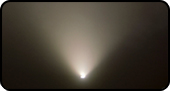
Light Source:Light sources used in VOLT® Lamps are Tungsten Halogen and LED. LEDs are the preferred source. 
Light Output & Brightness:Light output is the measure of light energy exiting a lamp (lumens). Brightness is the subjective perception of the light level by the viewer. 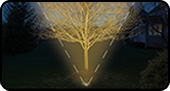
Beam Angle:A measure of the projected conical angle of a light beam that determines the beams width. 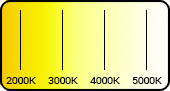
Color Temperature (CCT):An indication of the extent of bluish or yellowish tint present in white light. 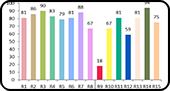
Color Rendering Index (CRI):An indication of how well a light source illuminates a subject to reveal accurate colors and hues - compared to incandescent light. 
LED Lamp Life (L70):The predicted length of time that a lamp retains a useful light output. 
Electrical Measurements:These include Voltage, Wattage, Amperage, and Power Factor. The "Lamp" in Landscape LightingVOLT® manufactures a variety of lamp types designed to fit specific VOLT® fixtures. All these lamps are available in both incandescent and LED versions.Lamp Types 
PAR36 Lamps (Parabolic Aluminized Reflector with 36/8” diameter) – This was the first lamp used in low voltage landscape lighting back in the 1950's. Also called a Sealed Beam Lamp, PAR lamps are durable and watertight – making them ideal for below-ground fixtures. VOLT®'s new LED PAR36s represent a dramatic improvement in the performance of these lamps. MR16 Lamps (Multifaceted Reflector with 16/8” diameter) – This is the most commonly used lamp for landscape lighting. Incandescent versions feature an internal faceted reflector that shapes the beam. Newer LED versions have no reflector and instead use columnar optics that produce a more evenly dispersed beam. VOLT® has the industry's largest selection of MR16 LED lamps to accommodate the widest variety of lighting designs. MR11 Lamps (Multifaceted Reflector with 11/8” diameter) – Similar in appearance to the MR16 but much smaller. The small size of the MR11 makes it ideal for very compact fixtures, but it is not available in very high light outputs. G4 Bi-Pin Lamps This lamp (like the MR16 and MR11) has two pins that are plugged into a socket. The pins, however, are narrower and the lamp body may have several different shapes. The shapes are important since they determine whether or not the lamp fits into a certain fixture. Check fixture specifications for more details. Light Source - LED vs. Halogen Prior to the LED revolution, Tungsten Halogen lamps (also known as quartz halogen) were the primary light source for landscape lighting. These lamps had better energy efficiency than older incandescent types, but they still produced a great amount of heat, had limited life (2,000 to 10,000 hrs.), and required a very narrow voltage range (10V to 12V) for normal operation. Now we have a much better light source, Light Emitting Diodes (LEDs). LEDs can achieve the same light output with up to 85% less energy (watts). They also produce far less heat than quartz halogen, and have a wider acceptable voltage range (8V to 15V). Perhaps the most astonishing difference is the longevity. VOLT® LED lamps have an estimated life of between 40,000 hrs. and 60,000 hrs. They are essentially “lifetime” light sources. While the initial investment in an LED lamp is somewhat greater than a quartz halogen lamp, that investment is paid off very quickly and results in a lighting system that requires no bulb replacements – ever. Light Output & Brightness When we compare the output of lighting fixtures, we need to use the correct language. The light that exits a lighting fixture is called Light Output. It is measured in Lumens (units of light energy). If you look at the specifications of a fixture, you will see such terms as Fixture Lumens or Fixture Output. These both describe the same thing – a measurement of lumens that exit the fixture. Lamps also have their own lumen specifications. Keep in mind, however, that lamp lumens only apply to the light output of the lamp when it is not in a fixture. Once you put the lamp in a fixture, only some of these lumens exit the fixture. Some manufacturers claim a certain number of lumens for a fixture, but they neglect to say whether these are lamp lumens or fixture lumens. Keep this in mind when comparing fixtures. Is brightness the same as light output? No, light output is an objective measurement – it can be measured with a light sensor. Brightness, on the other hand, is subjective (and relative). If you look at a lit bulb in a dark room, it seems very bright. If you look at the same bulb outdoors on a sunny day, it will seem very dim. That's why lighting pros avoid the terms bright or dim, instead they refer to differences in light output. Wattage to Lumen Equivalents Back in the days when most lights were of the incandescent filament types, wattage was a good way to describe light output. Everyone knew what a 40W or 60W bulb looked like. If you wanted a bright bulb for reading, you would select the 60W, if you just needed a light for a hallway, 40W was probably enough. That changed with the introduction of fluorescent and compact fluorescent (CFL) bulbs. A 20W CFL bulb had a light output equal to a 40W incandescent bulb. Now, with the introduction of LEDs, a 10W LED is equivalent to that same 40W bulb. Clearly, wattages are no longer a good way to assess light output. Instead, we use lumens. Eventually, we will learn to assess light output with lumens – wattages will no longer interest us. In the meantime, the following table is a rough approximation of lumens and wattage equivalents. Keep in mind, however, that this table can be misleading because of individual lamp characteristics. It's common, for instance, that certain LED fixtures are far more efficient and produce many more lumens than their incandescent equivalents. Lumens and watts conversion charts for your reference1:
1Data from Federal Trade Commission. Beam Angle Beam angle is an indication of the width of a beam of light. For example, lamps can have very narrow, narrow, wide, or extra wide beams. These terms don't actually describe the distance from one side of the beam to the other. Instead, they describe the angles measured from center of the beam to its edges. The way it's measured is to first find the brightest part of the beam (usually at its center) and to record that value (in candelas). Then the light meter is moved towards one edge of the beam until the candela reading is one-half the center reading. The angle between the center line and the edge line is measured. This is repeated on the opposite side of the beam, then the two angles are added together. The result is the beam angle. 
How do you select beam angles? Here are the common beam angles and suggested uses:
There are a few things to keep in mind about beam angles.
The following filters can be used to modify the beam angle in VOLT® fixtures:
Color Temperature (CCT - Correlated Color Temperature) While all landscape lighting uses white light sources, some of these sources have a warm hue (more yellow), others have a cool hue (more blue). This variation in yellowish or bluish hue is what determines color temperature. Color temperature is expressed in degrees Kelvin (K). A warm white light might be 2700K – 3000K. A cool white source might be 4000K to 4500K. See the chart below to examples for varying color temperatures. 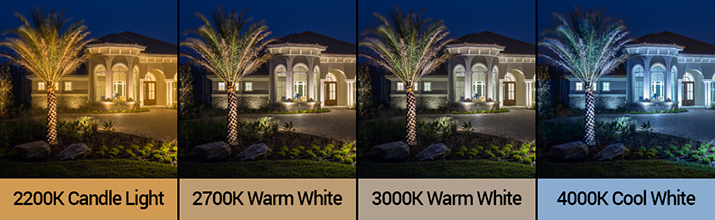
How do you select landscape lighting color temperature? • If you already have lighting on your property, you may want to keep the same color temperature throughout. (It can look strange to use different color temperatures among nearby lights.)
Color Rendering Index (CRI) If incandescent (filament-based) lights illuminate a scene, you will perceive (among the lit objects) certain colors and hues. If you change the light source to a non-incandescent type, you may find that the colors and hues look different. The ability of a light to accurately render colors and hues (compared to incandescent lighting) is called the color rendering index (CRI). A perfect CRI would be 100. Most high quality LEDs have a CRI of over 80. CRI's less than that should be avoided. LED Lamp Life (L70) Unlike older incandescent and fluorescent lights, LEDs do not typically burn out. Instead, they diminish in light output over time. That's why LED lamp life is determined by how long it maintains a useful light output. The most accepted measure of when the LED has reached the end of its useful life, is when the light output has diminished to 70% of its initial output. This is termed L70. Keep in mind that L70 is a predicted time based on the estimated temperature of the LEDs during operation. If an LED operates in a poorly designed fixture, it may overheat and diminish in brightness relatively quickly. There are also other factors concerning the components of the LED driver that may cause premature failure of the LED. For these reasons, L70 is not a good measure to use when comparing fixtures. Electrical Measurements
View All VOLT® MR16 Lamps
View All VOLT® G4 BiPin Lamps
View All VOLT® PAR36 Lamps
View All VOLT® MR11 Lamps
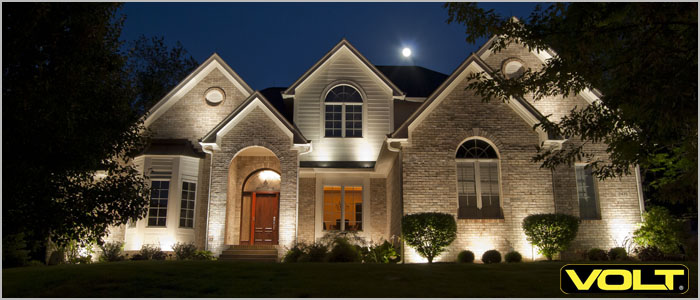
Shop for Landscape Lighting Fixtures
Back to Landscape Lighting Learning Center 
|
||||||||||||||||||||||||||||||||||||||||||||||||||||||||||||||||||||||||||||||||||||||||||||||||||||||||||||||||||||||||||||||||||||||||||||||||||||||||||||||||||||||||||||||||||||||||||||||||||||||||||||||||||||||||||||||||||||||||||||||||||||||||||||||||||||||||||||||||||||||||||||||||||||||||||||||||||||||||||||||||||||||||||||||||||||||||||||||||||||||||||||||||||||||||||||||||||||||||||||||||||||||||||||||||||||||||||||||||||||||||||||||||||||||||||||||||||||||||||||||||||||||||||||||||||||||||||||||||||||||||||||||||||||||||||||||||||||||||||||||||||||||||||||||||||||||||||||||||||||||||||||||||||||||||||||||||||||||||||||||||||||||||||||||||||||||||||||||||||||||
